

Chapter Eleven: The Rooms That Disappeared
There is at least one room missing from your house. You may not even know its name or think about what happened to it. But it was there once.
Maybe it was the morning room, the drawing room, or even the smoking room. Each of these spaces was designed around a specific purpose, a particular time of day, or a common social ritual. They defined relationships, confirmed economic status, and supported traditions. And then, for different reasons, they disappeared. Residential architecture adapted to new lifestyles as formality was replaced with a focus on comfort and functionality. Their disappearance tells us something important about how we live now, and what we have given up.
The morning room is perhaps the most elegant casualty.
In Georgian and Victorian households, it was the private domain of the mistress of the house. East-facing by design, it caught the early light. It was where she met with her housekeeper to plan the day’s meals, where she read her correspondence, where close friends were received informally rather than in the grander drawing room reserved for social performance.
What the morning room understood, and what we have largely forgotten, is that domestic life requires gradation. The hour before breakfast feels different than the hour after dinner. One is filled with expectation and planning while the latter is for entertainment and retreat. The morning room made that distinction architectural.
The drawing room, a contraction of the withdrawing room, is precisely that. After a formal dinner, the ladies would withdraw there while the men remained at the table with port and politics. A choreographed social space, the drawing room featured musical performances, crafts such as embroidery or watercolor painting, the exchange of local gossip, or a friendly card game, all of course accompanied by the service of tea and coffee.
The smoking room deserves a clear-eyed reading, whatever we now know about tobacco. At its heart, it was a room that gave men permission to be unguarded. Informal, paneled in dark wood, furnished with deep leather chairs, it was designed for relaxed conversation. The smoking was almost incidental. What the room actually provided was an architecture of ease, a place without pretense in a society that was beyond pretentious.
We have not replaced that function. We have simply scattered it, hoping the sofa will do the work the room once did.
The original butler’s pantry was a working room, positioned precisely between kitchen and dining room. It held the silver, the glassware, the fine china, the table linens. The butler slept there, in some households, because his primary responsibility was to keep those valuables under lock and key through the night. He decanted the wine there. He counted the silver daily. He kept the log of every bottle in the cellar and every piece of plate in the drawer.
An entire system of household governance was contained within this single room, and the person who occupied it held considerable authority precisely because of what that room represented.
What unites all of these rooms is what their disappearance reveals. The Victorian and Georgian house was built on a belief that different moments of life deserve different containers. That intimacy and formality are distinct experiences and should live in distinct architecture.
The open-plan house makes a different argument. It says that all of life can happen in one room, that flexibility is freedom, that walls are a limitation. Something has been lost in that trade. What is also fascinating is that we are seeing a current transition away from open floorplan living, embracing more division and walls to compartmentalize our spaces. Perhaps we are beginning to remember that different moments of life deserve different rooms.
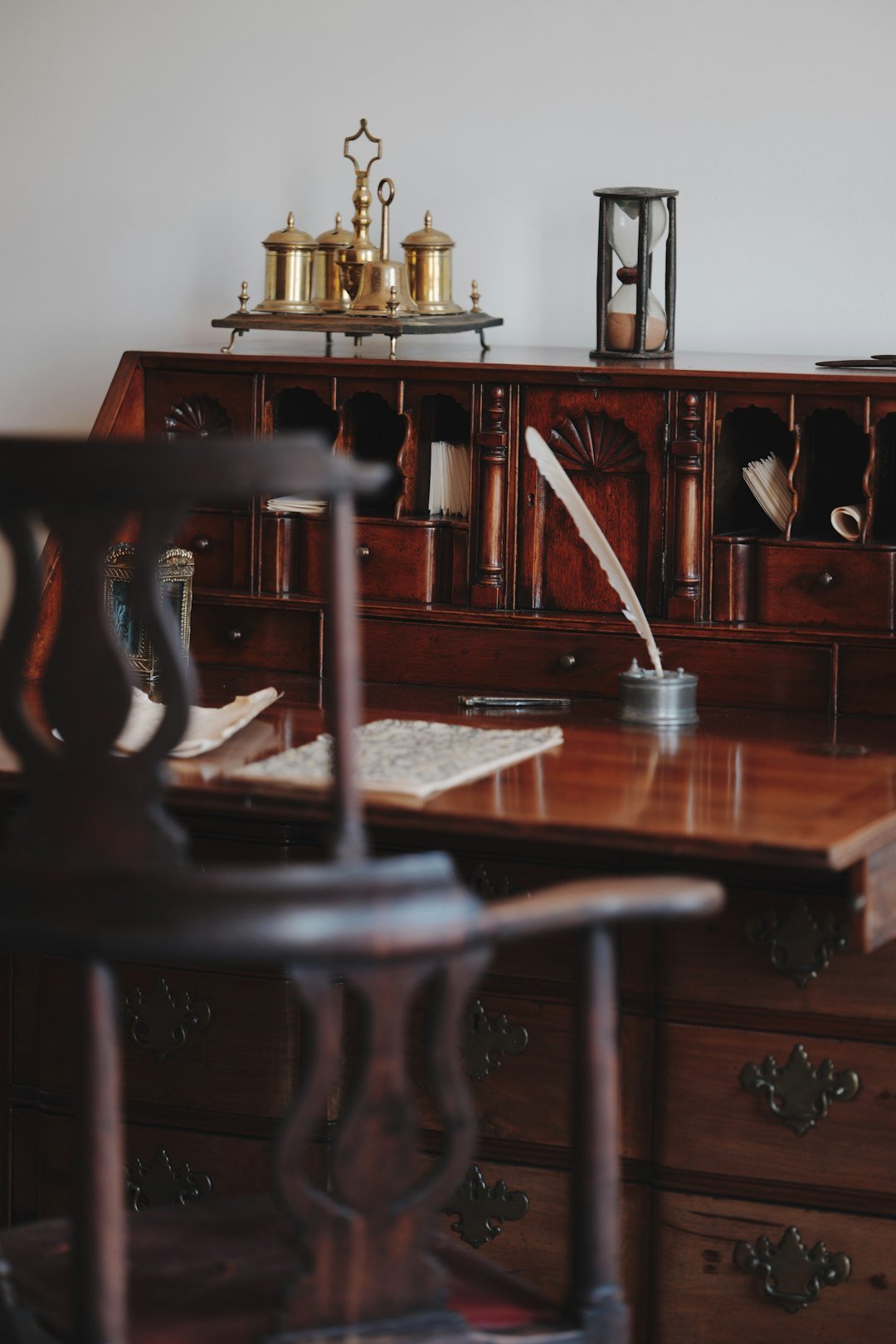
If you have a secretary desk in your living room, it may have come from a morning room. If you have a drinks cabinet in your study, it carries the logic of a smoking room. If you have a sideboard between your kitchen and your dining table, you are housing a gesture toward the butler’s pantry, even if the silver has been replaced by wine glasses and the log book by a grocery app.
The furniture remembers, even when we have forgotten the rooms.
A secretary desk was built for a morning room. A tantalus belonged in a smoking room. A silver-fitted sideboard served a butler’s pantry that was, in every sense, a vault. Each of these objects was designed for a room with a specific social purpose. That room is gone. The object is still here, carrying the logic of a world that organized itself very differently than ours does.
Knowing where it came from changes how you see it. That is the point of the history. It always was.
Remain ever curious,
The Lifestyle Historian
