

Chapter Nine: The Cup That Changed The World, Part II
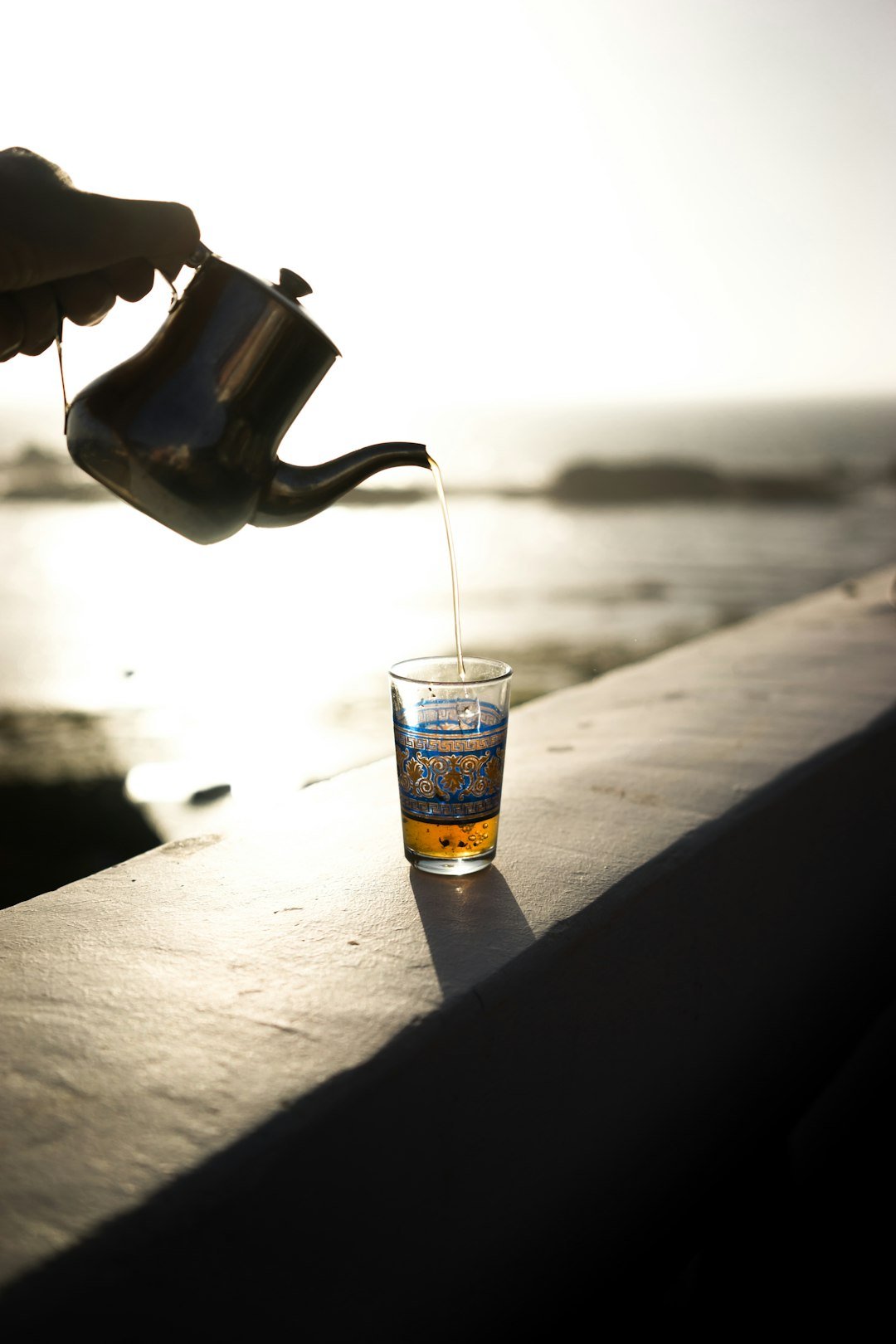
Photo by Vincent Riszdorfer on Unsplash
In Part I, we followed tea through its origins, from the mountains of Yunnan to the courts of Tang dynasty China, from a Japanese tearoom engineered for humility to the drawing rooms of Victorian England, where it arrived on the back of an opium trade that Britain fought two wars to protect.
That is the arc of tea as power. This is the arc of tea as welcome.
The two are not separate stories. They are the same plant, the same leaf, carrying entirely different weight depending on whose hands are holding the cup. That tension is exactly what makes tea worth studying.
Tea in the Middle East: Hospitality as Architecture
Travel to Iran, Turkey, Morocco, or Egypt, and you encounter tea again but in a completely different register.
In Iran, chai is served in small glass cups called estekan, so that the color of the tea is visible. The beautiful glass allows a good host to demonstrate through transparency that the tea is neither too pale nor too bitter. You hold the glass by the rim, sip through a sugar cube held between the teeth. The ritual is calibrated to slow a conversation down, to signal that whoever has come through your door is worth the time it takes to do this properly.
In Morocco, atay-green tea served with mint and enormous quantities of sugar-is poured from a great height to create a froth. This is deliberate. The pour aerates the tea, yes, but it is also performance. Moroccan hospitality is expressive, not austere. Where the Japanese tearoom strips everything away, the Moroccan tea tray adds: silver pots, stacked glasses, sprigs of mint, the arc of liquid through the air. Two completely different aesthetic philosophies, both organized around the same plant, both centrally concerned with making a guest feel received. I adore both aesthetics and appreciate all the customs but my personal preference is definitely the one of layers.
What strikes me every time I encounter tea in a new cultural context is that the disagreements are never about tea. They are about what welcome looks like. Tea is the occasion; the values are the content.
What the Teapot Knows
As someone who collects teapots, sets, and accessories, I want to say something about that which goes beyond curation.
It is no secret that objects that have been used carry information differently than objects made for display. A Yixing clay teapot that has been used for twenty years of daily brewing has absorbed the oils and tannins of thousands of cups. Experienced tea drinkers argue, and I believe them, that an old Yixing pot improves the tea brewed in it, that the clay itself becomes seasoned. You are, in some sense, drinking every cup that came before.
A Georgian silver teapot tells you about trade routes, about the wealth required to afford such an object, about the social theater of the afternoon tea table including the precision of the pouring, the hierarchy of who received the cup first. A Japanese tetsubin, the cast iron kettle, tells you about the sound of water, because the iron makes the water sing slightly as it heats, and this sound was considered part of the preparation.
These are not antiques. They are records. Every teapot I have acquired has taught me something about the civilization that made it and about what that culture thought was worth doing carefully.
Why This Still Matters
We live in a moment that is aggressively impatient. Attention has become the scarcest resource in modern life, and almost every technology deployed in the last decade has been optimized to fragment it further. Against this backdrop, the tea ritual-really any tea ritual, in any culture-is a mild but real act of resistance.
You cannot rush a proper brew. The temperature of the water matters (green tea scalds and turns bitter above 80°C/176°F; black tea needs near-boiling water). The steeping time matters. If you are using a gongfu cha setup, the Chinese method of small pots and multiple short infusions, you are watching time closely, making adjustments, tasting as you go. This marks the deliberate choice to be present for something small.
Anthropologists have a concept sometimes called ‘time affluence’ or the feeling of having enough time, which correlates strongly with wellbeing. Tea rituals create islands of time affluence. Not because they take long, but because they require genuine presence for their duration.
Tea is drunk in high-altitude guesthouses in Nepal served with yak butter and salt, which I have heard is not especially pleasant on the first encounter. Tea is drunk in a cramped tea shop in Istanbul at midnight with strangers who become, for an hour, something like friends. Tea is drunk alone in one’s kitchen on mornings when the world feels too fast, using a pot bought from a craftsman in Jingdezhen.
Every one of those cups presents a connection to something larger than just that present moment.
The Lifestyle Historian’s Case for Tea
This is what I mean when I say that history is not something that happened to other people in other times. It is something you can hold in your hands, taste in a cup, feel in the weight of a well-made pot. The civilizations that developed tea culture were not doing something quaint. They were solving real problems: how to be present, how to welcome a stranger, how to mark time, how to make ordinary moments carry meaning.
Those problems have not been solved. They never will be, permanently. Each generation inherits them.
Tea is one of humanity’s most sophisticated answers to the question of how to slow down long enough to pay attention. The fact that it tastes good while doing so is either a happy accident or proof that the universe has a sense of humor.
Either way, I recommend brewing a cup before you decide.
With Curiosity,
The Lifestyle Historian
